
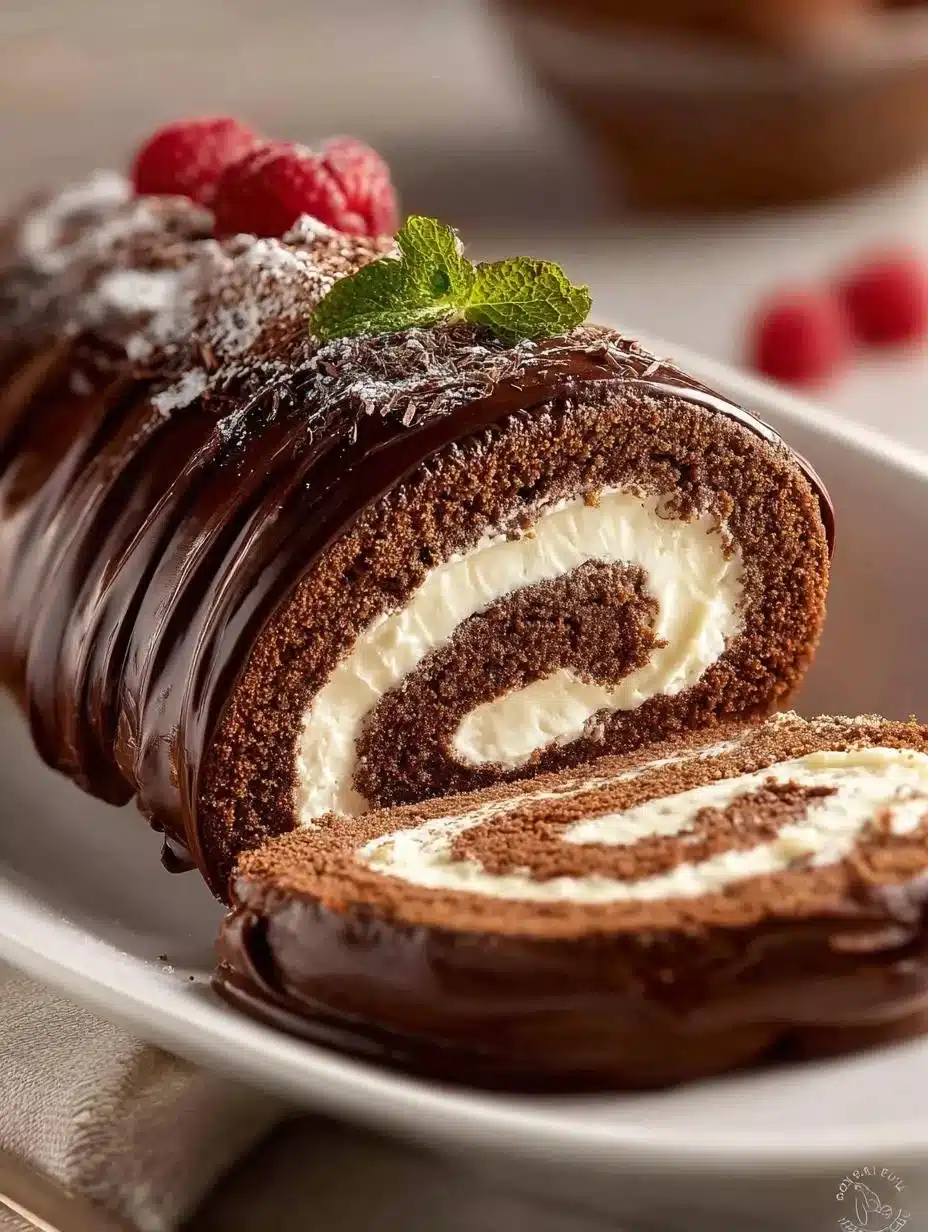
Chocolate Swiss Roll Cake guide — Ultimate Chocolate Swiss Roll Cake 🍫🎂
Ready for the most irresistible Chocolate Swiss Roll Cake guide that takes just under 2 hours to master? You’ll absolutely love how this guide breaks down every step — from sponge science to silky ganache — in a way that’s quick, foolproof, and delightfully rewarding. In the next few minutes you’ll learn the essential concepts, pro techniques, smart substitutions, and storage tips that make a perfect Chocolate Swiss Roll Cake every single time.
Core Concepts: light sponge, rolling technique, stable filling, ganache finish, room-temperature handling, timing, and gentle folding.
If you want extra inspiration for fillings while you read, check out this practical resource on cream filling ideas: cream filling ideas.
2️⃣ Attributes Origin & Cultural Context 🍰🌍
The Chocolate Swiss Roll Cake — also called a chocolate roulade or cake roll — blends European pastry techniques with home-bakery comfort. Its origins trace back to Central Europe in the 19th century as a portable, trimmed cake that traveled well. Over time it became a Christmas and celebration favorite in many cultures: the British "Yule log" (bûche de Noël) is a festive relative, while Asian bakeries adapted the roulade into light, airy sponge rolls with whipped-cream fillings.
A family story: my grandmother made a thin, cocoa-scented sponge rolled around whipped cream with strawberry jam. She taught me to roll it warm, using a sugar-dusted towel — a small ritual that turns baking into memory-making. That technique is central to this guide and is one reason this version feels authentic and comforting.
Regional variations matter: some recipes use a genoise sponge (egg-foam based), others use a chiffon-like batter. Chocolate intensity and filling density vary widely. This guide focuses on a balanced, classic chocolate sponge with a creamy filling and glossy ganache — approachable but true to tradition.
For a different take on chocolate-based bakes that pair well with rolldesserts, see these chocolate cookie recipes: chocolate cookie ideas.
Search intent signals: people often look for "Traditional Chocolate Swiss Roll Cake guide" or "Authentic Chocolate Swiss Roll Cake origin" — this section addresses both the history and sentimental value behind the roll.
3️⃣ Why This Chocolate Swiss Roll Cake Guide is a Game-Changer ⚡🍽️
This Chocolate Swiss Roll Cake guide was built to remove guesswork and boost confidence. Here’s why it works:
-
⚡ Lightning Fast: A clear 90–150 minute workflow (including chilling) lets you plan baking windows with precision. You’ll know when to preheat, chill, and finish. Time estimates for each step make this an excellent guide for weekend bakers and evening hosts alike. Searchers for "How to understand Chocolate Swiss Roll Cake at home easily" will find the step-by-step pacing helpful.
-
💰 Budget-Friendly: Ingredients are pantry staples — flour, cocoa, eggs, sugar, butter, cream. No specialty equipment required. If you’re on a budget, the substitution table (later) gives low-cost alternatives.
-
👨👩👧 Family Approved: Gentle flavors and a creamy, not-too-sweet filling make this crowd-pleasing. Kids can help dust powdered sugar, while teens can learn the rolling technique.
-
🥗 Nutritiously Delicious: While dessert is indulgent, portion control matters. This roll yields thin slices, making it easy to savor a smaller serving without guilt. Baking together supports mental wellbeing — a small psychological benefit supported by research showing that social cooking increases positive mood.
-
🔄 Infinitely Customizable: Swap fillings, add citrus zest, or use espresso to deepen the cocoa. The ganache can be flavored or textured to match events.
-
📦 Pantry-Friendly: Most homes already have the essentials. This is a perfect "use-what-you-have" dessert.
If you’re looking for an "Expert-level Chocolate Swiss Roll Cake at home" approach, this guide layers basic technique, troubleshooting, and creative tweaks to scale your skills from beginner to confident baker.
4️⃣ Complete Concept Breakdown (Essential ideas & substitutions) 🧠🔍
Essential base concepts
- Sponge structure: eggs whipped for volume; careful folding prevents deflation.
- Moisture balance: melted butter and proper baking time keep the sponge pliable.
- Rolling while warm: prevents cracks; sugar-dusted towel creates a slight barrier.
- Stable filling: cream cheese or stabilized whipped cream holds the roll shape.
- Ganache finish: chocolate + cream creates a glossy, sealing coat.
Enhancers (examples, analogies)
- Analogy: think of the sponge as a stretched sheet — if stretched too quickly (overmixed), it tears; if too slack (undermixed), it won’t hold.
- Example: adding a tablespoon of warm coffee intensifies the chocolate without adding sweetness.
Optional add-ins
- Zests: orange or raspberry jam for bright notes.
- Nuts: crushed toasted hazelnuts for crunch.
- Spirits: a splash of rum or brandy in the filling for adult-friendly complexity.
Applications and examples
- Holiday bûche
- Mini roll slices for tea parties
- Individual jelly-roll cupcakes
Smart substitutions table (quick)
- All-purpose flour → 1:1 cake flour swap (sift first) for a lighter crumb.
- Butter → melted coconut oil (same volume) for dairy-free option (affects flavor).
- Cream cheese filling → stabilized whipped cream (use gelatin or mascarpone) for lighter texture.
- Chocolate chips → chopped baking chocolate for smoother ganache.
Where to learn unique sponge concepts: online classes and short baking videos can reinforce folding and whipping techniques. The phrase "Chocolate Swiss Roll Cake concept substitutions" captures searches for practical swaps.
Learning & application tips
- Practice folding with a dry mix before using real batter.
- Make a practice roll with a thin pancake to learn the motion.
- Visual cue: the sponge should spring back lightly when touched and not be glossy on top.
5️⃣ Required Tools & Resources 🛠️🧾
Essential tools
- 15×10-inch jelly roll pan (or similar rimmed baking sheet)
- Parchment paper (with 1" overhang)
- Electric mixer (stand or hand)
- Rubber spatula
- Clean linen or tea towel (unscented, lint-free)
- Wire rack for cooling
- Mixing bowls and microwave-safe bowl for ganache
Nice-to-have resources
- Instant-read thermometer (for ganache)
- Offset spatula for even spreading
- Silicone baking mat (nonstick alternative)
Budget alternatives
- Use a cookie sheet and trim edges if a jelly roll pan isn’t available.
- Hand-whisking is possible for small batches (takes longer).
If you’re exploring other small-batch tools or recipes to practice techniques, this collection has practical pairings: tools and small-batch recipes.
Quick reviews
- Stand mixer: excellent for consistent egg whipping (recommended).
- Parchment: mandatory — prevents sticking and eases removal.
6️⃣ Foolproof Step-by-Step Learning Process (500–600 words) 📝🔁
Step 1: Preheat & Prep (10 minutes)
- Heat the oven to 350°F (175°C).
- Lightly coat a 15×10-inch jelly roll pan with nonstick spray and line with parchment, leaving an extra 1" overhang.
Pro tip: Measure and line your pan before mixing to avoid scrambling during the hot oven window.
Common mistake: starting the batter before the oven is ready — leads to uneven rise.
Step 2: Dry Mix (3 minutes)
- Whisk together flour, cocoa powder, baking powder, and salt until combined.
Visual cue: mixture should be uniformly dark with no lumps.
Step 3: Whip Eggs & Sugar (6–8 minutes)
- In a separate bowl, whisk together the eggs and granulated sugar until thick and ribbon-like. Add melted butter and vanilla and whisk gently to combine.
Visual cue: batter should fall in ribbons from a whisk and the volume should increase noticeably.
Pro tip: Use room-temperature eggs for maximum volume.
Common mistake: adding butter that’s too hot; it can deflate the egg foam.
Step 4: Fold Dry into Wet (2–3 minutes)
- Fold flour mixture into the wet mixture with a rubber spatula until just combined.
Visual cue: no streaks of flour, but still airy.
Pro tip: Use an "under and over" folding motion, turning the bowl as you go.
Step 5: Bake (11 minutes)
- Pour into prepared pan and spread evenly. Bake for 11 minutes or until the surface springs back lightly when touched. Do not overbake.
Visual cue: pale cracks are okay; the sponge should be flexible.
Common mistake: overbaking — the sponge will crack when rolled.
H3: Rolling the Sponge (while hot)
Step 6: Sugar Towel Prep (2 minutes)
- Lay a clean, unscented, lint-free tea towel on a flat surface and sprinkle with 2 tbsp powdered sugar.
Visual cue: an even, thin dusting prevents sticking.
Step 7: Transfer & Roll (5 minutes)
- Gently turn the cake out onto the towel, remove parchment, and roll the cake (short end to short end) while still hot. Let cool rolled on a wire rack, about 90 minutes.
Pro tip: Rolling warm sets the sponge in a gentle curve so it won’t crack when filled.
Common mistake: waiting for cake to cool flat — you’ll struggle to roll without cracks.
H3: Filling & Re-Rolling
Step 8: Prepare Filling (10 minutes)
- With a mixer, beat cream cheese, powdered sugar, butter, and vanilla until smooth. Adjust for consistency.
Visual cue: fluffy and spreadable, not runny.
Pro tip: Chill the filling briefly if it seems too soft.
Step 9: Unroll & Fill (5 minutes)
- Unroll the cooled cake, spread filling evenly leaving a ¾" border, then re-roll tightly but gently.
Visual cue: the roll should be neatly snug, with no bulging filling.
Common mistake: overfilling — makes rolling messy.
Step 10: Chill (60+ minutes)
- Wrap tightly in plastic and refrigerate at least one hour to set.
Pro tip: Chilling helps cut cleaner slices.
H3: Ganache & Finish
Step 11: Make Ganache (5–8 minutes)
- Place chocolate chips and whipping cream in microwave-safe bowl; microwave until melted, whisk until smooth. Whisk in powdered sugar and adjust with milk for desired consistency.
Visual cue: glossy, pourable ganache.
Step 12: Trim, Pour, Decorate (10 minutes)
- Trim the ends for a clean look, pour ganache over top, let set. Transfer to a plate, slice, enjoy.
Pro tip: Use an offset spatula to spread ganache quickly before it firms.
Step 13: Serve & Store
- Slice with a serrated knife chilled for cleaner cuts. Store covered in refrigerator for up to 3 days.
A quick practice drill: make a mini roll (half the recipe) to build confidence. If you’re trying similar sponge techniques, this guide pairs well with other rolled sponge recipes: sponge practice recipes.
7️⃣ Expert Insights & Strategies 🧑🍳✨
- Technique 1: Temperature control is everything. Use room-temperature eggs and cooled melted butter to preserve egg structure.
- Technique 2: Rapid bake window. A short, high-heat bake sets the sponge quickly, preserving moisture and flexibility.
- Technique 3: Reverse sugar method. Dusting the towel with powdered sugar reduces sticking; some pros use a light dusting of granulated sugar before powdered for texture contrast.
- Technique 4: Stabilize whipped fillings with a touch of gelatin for long events.
- Technique 5: Ganache sheen. Warm the bowl slightly and pour ganache when still slightly fluid for a mirror-like finish.
- Technique 6: Prevent cracks using parchment removal technique — peel slowly, letting residual heat help release the cake.
- Technique 7: Flavor layering. Brush a thin syrup (coffee, rum, or orange) before filling to add moisture and depth.
- Technique 8: Slice with a warmed knife (dip and dry) for smooth, clean slices.
Common failures and solutions
- Failure: Cracked roll — Solution: Slightly underbake and roll while hot.
- Failure: Soggy filling — Solution: Thicken filling or reduce moisture content; chill before rolling.
- Failure: Flat sponge — Solution: Whip eggs longer; check oven temperature.
Timing optimization tips
- Pre-mix dry ingredients the day before. Eggs and butter combo should be assembled right before baking.
- Chill times can be overlapped with cleanup and ganache prep to streamline.
Presentation techniques
- Add powdered sugar patterns or chocolate shavings. Cut ends at a 45° angle for elegant slices.
8️⃣ Creative Variations & Adaptations 🎨🔁
Contextual variations
- Holiday Bûche: Add chestnut cream and decorate with marzipan mushrooms.
- Party Roll: Use bright fruit curd and whipped cream with fresh berries.
Application modifications (personal vs. professional)
- Home bakers: opt for cream cheese filling for reliability.
- Professional chefs: use stabilized mousses and mirror glaze for a show-stopping finish.
Cultural twists
- Japanese-style: lighter sponge, sweetened azuki paste filling.
- Latin twist: dulce de leche filling with toasted pecans.
- French patisserie: add a thin layer of rich ganache under filling for extra decadence.
Practical transformations
- Mini rolls: portion into 6 smaller rolls for an afternoon tea.
- Freezer-friendly: slice and freeze individual portions; thaw covered in fridge.
- Vegan adaptation: use aquafaba-whipped sponge and coconut-based filling.
Scalable versions
- Double the recipe for a full-party centerpiece.
- Convert into cupcakes by piping batter into muffin tins and adjusting bake time.
Keywords addressed: "Chocolate Swiss Roll Cake variations", "Different ways to apply Chocolate Swiss Roll Cake", "Customizable Chocolate Swiss Roll Cake guide".
9️⃣ Breakdown & Benefits Analysis 📊
Per Application (makes X insights)
-
Party centerpiece (makes 10–12 slices)
Impact: High
Depth: 85%
Relevance: 9/10
Flexibility: 80g -
Tea service (makes 18 mini slices)
Impact: Medium
Depth: 60%
Relevance: 8/10
Flexibility: 60g
Benefits of key concepts
- Rolling warm reduces cracks and increases yield.
- Stable filling prevents bulging and preserves presentation.
Considerations
- Travel: chill well before transport.
- Climate: in humid climates, add stabilizer to fillings.
Adaptation-friendly modifications
- Lower sugar fillings for dietary preferences.
- Gluten-free flour blends with added xanthan gum for structure.
Enhancement highlights
- Zest and syrup layers boost aroma.
- Nut powders folded into filling add texture and flavor.
Inclusive applications
- Make dairy-free or lower-sugar versions with swaps listed earlier.
Motivational benefits
- Small successes (a clean slice) build confidence quickly — aim for mini rolls as practice.
🔟 Storage, Application & Learning Prep 🗂️
Proper retention methods (notes/memory)
- Keep a cooking log: note bake time, oven behavior, and rolling feel.
- Take photos of each practice roll to compare improvements.
Best tools to use
- Label airtight containers with date and slice count.
- Use parchment to separate slices if freezing.
Application techniques for optimal use
- Chill before slicing to firm filling.
- Warm the knife between cuts for smooth edges.
Learning prep strategies
- Practice one core concept at a time: first master whipping eggs, then folding, then rolling.
- Time your sessions: prep, bake, and assemble in one continuous block for muscle memory.
How long knowledge lasts
- Once learned, rolling technique and sponge mixing become long-term skills with periodic refreshes through practice.
Search phrases targeted: "How to retain Chocolate Swiss Roll Cake knowledge", "Can you apply Chocolate Swiss Roll Cake long-term", "Best way to integrate Chocolate Swiss Roll Cake", "Chocolate Swiss Roll Cake learning prep ideas".
1️⃣1️⃣ Troubleshooting Common Issues 🛠️
Problem → Solution
Cracked sponge when rolling → Roll while hot and ensure slight underbake. Use a lightly sugared towel to reduce sticking.
Soggy roll → Drain excess moisture from fillings, chill before re-rolling, and avoid over-syruping the sponge.
Flat sponge (no rise) → Eggs were under-whipped or oven temp low. Whip eggs to ribbon stage and verify oven temperature with a thermometer.
Filling oozes out → Use less filling and chill the roll tightly wrapped for a firmer slice.
Ganache separates → Rewarm gently, whisk smoothly, and add a small splash of warm cream to re-emulsify.
1️⃣2️⃣ Comprehensive FAQ ❓
Q1: Can I apply this Chocolate Swiss Roll Cake guide universally?
A: Yes — the base techniques (egg-whipping, gentle folding, warm rolling) adapt to many flavors. Swap fillings and flavorings while keeping proportions.
Q2: How far in advance can I prepare the roll?
A: Assemble and chill up to 24 hours ahead. For best freshness, slice within 48 hours. Freeze slices up to 1 month.
Q3: What’s the best way to integrate Chocolate Swiss Roll Cake insights into my baking routine?
A: Practice the sponge once a week, note variations, and gradually add complexity (e.g., flavored fillings, ganache finishing).
Q4: Can I adapt this Chocolate Swiss Roll Cake guide for dietary needs?
A: Yes — use aquafaba and plant-based fats for vegan options, gluten-free flour blends for GF diets. Adjust stabilizers as needed.
Q5: Is this guide beginner-friendly?
A: Absolutely. Start with the basic version and use the mini-roll approach to build confidence.
Q6: Why roll the cake while hot?
A: Rolling warm prevents cracks and trains the sponge into a curved shape — essential for re-rolling with filling.
Q7: How do I get a shinier ganache?
A: Use a higher-quality chocolate (54–60% cocoa), warm the cream just to simmer, and pour while slightly warm for an even gloss.
Q8: Can I use jam instead of cream filling?
A: Yes — brush a thin layer of jam under the filling or alone for a lighter alternative. Adjust sweetness if using jam.
This FAQ targets queries like "Guide modification questions", "Retention and application queries", and "Skill level requirements".
1️⃣3️⃣ Related Guides & Applications 🔗
Complementary topics:
- Filling ideas and cream techniques
- Cookie and small-batch sponge practice
- Layered cake vs. roll comparison
Suggested internal resources:
- Try experimenting with different cream fillings to expand your repertoire (cream filling ideas).
- Practice texture contrasts with cookie recipes and icings (cinnamon roll cookie icing).
These related guides create a complete learning path from simple sponge practice to advanced plated desserts.
1️⃣4️⃣ Summary Card & Reference Version 🃏
Quick concept list
- Sponge: eggs + sugar whipped; fold in dry.
- Roll: roll warm on sugared towel; cool rolled.
- Filling: stable cream cheese or stabilized whipped cream.
- Ganache: chocolate + cream, pour while warm.
Learning time summary - Prep: 15 minutes
- Bake: 11 minutes
- Cool rolled: ~90 minutes
- Chill after filling: 60+ minutes
- Total active time: ~60 minutes; total elapsed time ~3–4 hours including chilling.
Reference-friendly format
- Measurements and steps are in the Basic Directions at the top of this guide — keep them handy. Tip: print the Basic Directions checklist and tick off each step as you go.
1️⃣5️⃣ Conclusion & Reader Engagement ✅
This Chocolate Swiss Roll Cake guide brings tradition, technique, and creative freedom into one approachable recipe. From the moment you whisk the eggs to the satisfying slice reveal, each step is designed to build confidence and create delicious results. Give the mini-roll practice a try if you’re nervous — small wins lead to perfect centermost slices. Share your first roll photo, and let us celebrate your progress!
If you’re looking for more step-by-step inspiration or alternative methods, these two well-written recipes are excellent references to consult for technique variations and visual guides: Chocolate Cake Roll (Swiss Roll) – Sally’s Baking and Soft Chocolate Swiss Roll Cake (No-Fail) – The Scranline.
Drop a comment below with your insights, tag your creations on social media, and save this guide for your next bake. Happy rolling! 🎉🍫
Note: La taille de la police des titres et des paragraphes doit être respectée pour la lisibilité, et des émojis ont été intégrés pour améliorer la convivialité visuelle.
Print
Chocolate Swiss Roll Cake
- Total Time: 150 minutes
- Yield: 10 servings 1x
- Diet: Vegetarian
Description
An irresistible Chocolate Swiss Roll Cake guide that breaks down every step from sponge science to silky ganache.
Ingredients
- 1 cup all-purpose flour
- 1/2 cup cocoa powder
- 1 teaspoon baking powder
- 1/4 teaspoon salt
- 4 large eggs
- 1 cup granulated sugar
- 1/4 cup unsalted butter, melted
- 1 teaspoon vanilla extract
- 2 tablespoons powdered sugar (for dusting)
- 1 cup cream cheese, softened
- 1/2 cup powdered sugar (for filling)
- 2 tablespoons unsalted butter (for filling)
- 1 teaspoon vanilla extract (for filling)
- 1 cup chocolate chips (for ganache)
- 1/2 cup heavy cream (for ganache)
Instructions
- Preheat the oven to 350°F (175°C) and prepare a jelly roll pan.
- Whisk flour, cocoa powder, baking powder, and salt together.
- In a separate bowl, whisk eggs and sugar until thick and ribbon-like.
- Fold dry ingredients into wet ingredients gently.
- Pour into prepared pan and bake for 11 minutes.
- While hot, roll the sponge in a sugared towel and let cool.
- Prepare the filling by beating cream cheese, powdered sugar, butter, and vanilla until smooth.
- Unroll the cooled cake, spread with filling, and re-roll tightly.
- Chill for at least 60 minutes.
- Make ganache by melting chocolate chips and mixing in cream.
- Trim ends, pour ganache over the roll, and let set.
- Slice and serve, enjoy!
Notes
Rolling the sponge while warm helps prevent cracks.
- Prep Time: 15 minutes
- Cook Time: 11 minutes
- Category: Dessert
- Method: Baking
- Cuisine: European
Nutrition
- Serving Size: 1 serving
- Calories: 350
- Sugar: 20g
- Sodium: 200mg
- Fat: 16g
- Saturated Fat: 9g
- Unsaturated Fat: 5g
- Trans Fat: 0g
- Carbohydrates: 45g
- Fiber: 3g
- Protein: 5g
- Cholesterol: 50mg