
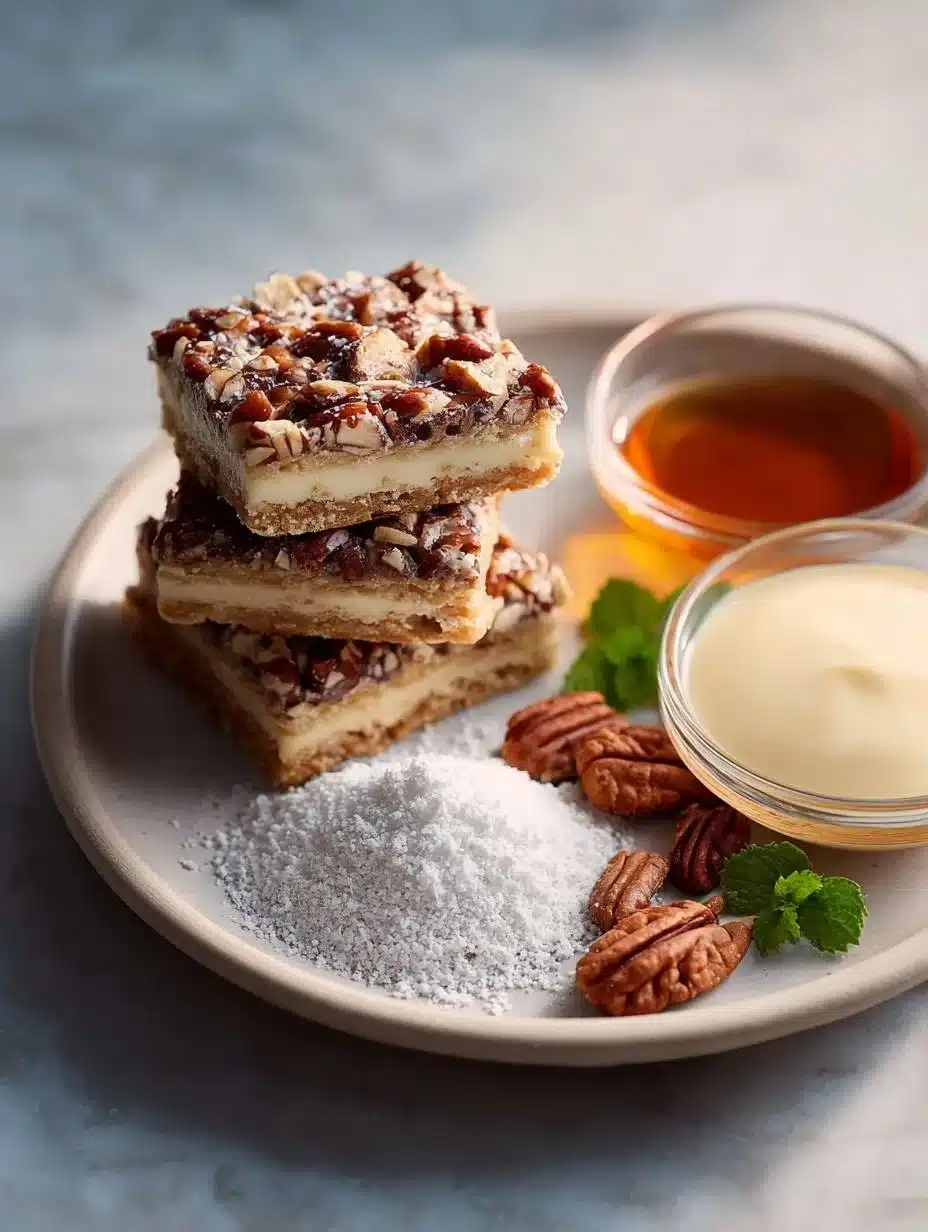
Pecan Shortbread guide: Ready for the most irresistible shortbread you’ll master in 30 minutes 🍪
You’ll absolutely love this Pecan Shortbread guide — quick, foolproof, and delightfully nutty. In the next few minutes you’ll learn a simple method to bake tender, buttery shortbread loaded with toasted pecans, plus variations, troubleshooting tips, and storage advice so every batch comes out perfect. Want a family-friendly cookie everyone raves about? This guide shows you how to understand Pecan Shortbread in practical steps, from pantry basics to expert tweaks. By the end you’ll know why small changes (like toasting nuts or swapping sweeteners) transform texture and flavor, and you’ll have the confidence to customize the recipe for holidays, gifts, or everyday treats.
Core Concepts: butter-to-flour ratio, nut toasting, dough handling, chilling vs. immediate bake, texture balance, flavor enhancers (honey, vanilla), substitution strategy.
Quick preview: I’ll walk you through the cultural background, a clean concept breakdown, required tools, a detailed step-by-step process with pro tips and sensory cues, plus creative variations and troubleshooting. Ready? Let’s bake something memorable. For an alternative shortbread twist, see this easy festive version of Sugar Plum Shortbread Cookies: Sugar Plum Shortbread Cookies.
Attributes Origin & Cultural Context 🌍 (H2)
Pecan shortbread combines two deep culinary traditions: the Scottish/English shortbread heritage and the American love of pecans. Shortbread itself dates back to medieval Scotland — a simple, butter-rich biscuit made from flour, sugar, and butter. Pecans entered the picture in the American South, where native pecan trees produced a rich, buttery nut that complements shortbread’s mellow profile.
My own family memory: my grandmother always toasted a handful of pecans and stirred them into plain shortbread for Christmas gift boxes. The first bite — a tender, sandy cookie with warm toasted nut notes — became a holiday anchor. That personal touch is what makes this version special: we keep the classic shortbread base but add toasted pecans and a hint of honey for depth.
Regional variations include:
- Southern U.S.: more brown sugar or molasses-like notes.
- Modern bakers: brown butter and sea salt for contrast.
- Nut-free adaptations: sunflower seeds or toasted oats for texture.
For a cranberry-chocolate riff inspired by holiday pairings, try this festive white-chocolate-pecan combination: White Chocolate Cranberry Pecan.
Keywords woven in: Traditional Pecan Shortbread guide, Authentic Pecan Shortbread origin, Classic Pecan Shortbread history.
Why This Pecan Shortbread Guide is a Game-Changer ⚡ (H2)
This Pecan Shortbread guide is built to be approachable, repeatable, and customizable — ideal for beginners and rewarding for experienced bakers. Here’s why it stands out:
Lightning Fast and Clear (time to understand): The core concepts can be absorbed in under 10 minutes. The recipe itself is quick to assemble — about 15 minutes active prep plus a 24–26 minute bake. That means you can go from pantry to plate in under an hour.
Budget-Friendly: Ingredients are pantry-stable and affordable. Butter, flour, sugar, pecans (or substitutes), and a touch of honey or vanilla. No specialty equipment required.
Family Approved: The flavor profile is warm and familiar — children and elders often agree. Texture is forgiving: slightly crumbly rather than fragile, so it’s sturdy enough for gifting.
Nutritiously Delicious (mental health boost): Baking shortbread is an easy, meditative activity. Toasting nuts and kneading dough provide sensory cues that lower stress; sharing the results boosts social connection. A small piece of rich cookie also satisfies craving with less overeating when portioned intentionally.
Infinitely Customizable: This method supports swaps — brown butter, citrus zest, cinnamon, or a drizzle of dark chocolate. You’ll learn substitution frameworks so you can adapt to allergies or preferences.
Pantry-Friendly: Most kitchens already have the essentials. The approach teaches how to balance butter-to-flour ratios and when to rest dough — knowledge that translates to other pastries.
Long-tail keywords included: How to understand Pecan Shortbread at home easily, Best Pecan Shortbread guide for beginners, Quick Pecan Shortbread learning method, Expert-level Pecan Shortbread at home.
This guide doesn’t just give a recipe — it explains why each step matters, helping you confidently adapt and troubleshoot.
Complete Concept Breakdown 🧠 (H2)
Essential concepts for Pecan Shortbread — organized for clarity.
Essential base concepts
- Butter-first balance: Shortbread texture depends primarily on fat to flour ratio. Too much butter → spreading; too little → dry crumb.
- Minimal handling: Overworking develops gluten and toughens cookies. Shortbread benefits from a gentle touch.
- Nut preparation: Toasting pecans amplifies flavor and improves crunch without adding moisture.
- Sweetness and binders: A bit of powdered sugar and honey balances tenderness and cohesiveness.
Enhancers (examples, analogies)
- Brown butter: Think of caramelized milk solids boosting complexity — like swapping regular coffee for espresso.
- Sea salt flakes: Act as punctuation marks on the palate, enhancing butter and nutty tones.
- Citrus zest: Brightens and lifts — use sparingly to avoid competing with pecans.
Optional add-ins
- White chocolate chips
- Chopped dried cranberries
- Cinnamon or cardamom
- A little cornstarch for extra tenderness
Applications and examples
- Holiday cookie trays
- Gift boxes: wrap in parchment and tie with twine
- Crumb base: use as crust for tarts
Pecan Shortbread concept substitutions
- Nut-free: toast and grind sunflower seeds or use toasted oats for texture.
- Low-sugar: reduce sugar slightly and add a touch of maple syrup or honey for moisture.
- Gluten-free: swap with a 1:1 gluten-free flour blend plus 1–2 tbsp extra almond meal for structure.
Where to learn [unique concept]: Practice the butter-to-flour ratio by making small 1/2-batches and noting spread vs. texture. Keep a log of adjustments. This is the best way to internalize "how to understand Pecan Shortbread" beyond a single recipe.
Smart substitutions table (quick reference)
- Butter (unsalted) → Brown butter for depth; margarine (not recommended) → affects flavor and texture
- Powdered sugar → Superfine sugar (if you like more crunch)
- Pecans → Walnuts or toasted almonds (texture change)
- Honey → Maple syrup or corn syrup (affects browning)
Learning and application tips
- Taste roasted pecans before mixing to calibrate roast level.
- If dough seems crumbly, a teaspoon of cold water or extra honey can help bind without adding gluten.
- Practice pressing dough evenly into the pan — an even thickness yields uniform baking.
SEO phrases used: Essential concepts for Pecan Shortbread, Best examples for Pecan Shortbread, Pecan Shortbread concept substitutions.
Required Tools & Resources 🛠️ (H2)
Essential tools
- 9-inch square baking pan lined with parchment (for even edges)
- Food processor (efficient for incorporating nuts and creating even dough)
- Dry skillet (for toasting pecans)
- Spatula, bench scraper, measuring cups and spoons
- Cooling rack
Nice-to-have resources
- Digital scale (precision for consistent results)
- Small offset spatula for smoothing dough
- Baking stone or insulated sheet for even heat
Budget alternatives
- Skip the food processor: finely chop toasted pecans by hand and cut butter into dry ingredients with a pastry cutter or two knives.
- Use a regular 8×8 pan if you don’t have 9-inch — adjust cooking time slightly.
Specific recommendations (brief)
- Food processor: a 7–10 cup model balances power and size.
- Pans: light-colored aluminum pans give the most even bake for shortbread.
- Skillet: cast iron or stainless steel both toast nuts well; keep heat moderate.
Tip: For readers without a food processor, see the substitution notes in the concept breakdown — hand-chopping and a simple cutter technique yield excellent results.
(Internal link placement for variety: check a festive spin-off like Sugar Plum Shortbread Cookies for inspiration.)
Foolproof Step-by-Step Learning Process (H2)
This section is the heart of the guide. Follow each step, note sensory cues, and use the pro tips and common mistakes to get predictable results.
Step 1: Preheat & Prep (5 minutes)
- Action: Preheat the oven to 350°F (175°C). Line a 9-inch square pan with parchment, leaving an overhang for easy removal.
- Visual cue: Oven reads 350°F; parchment smoothly covers the pan.
- Pro tip: Place the parchment so it extends two opposite sides — you can lift the whole slab out after baking.
- Common mistake: Skipping parchment — shortbread can stick and break when removing.
Step 2: Toast the Pecans (5–7 minutes)
- Action: Toast pecans in a dry skillet over medium heat, stirring frequently, until fragrant and golden. Cool completely.
- Sensory cues: Smell shifts from raw nutty to toasty; color deepens slightly.
- Pro tip: Toast in small batches for even color. If you’re using a food processor, let pecans cool fully to avoid melting butter.
- Mistake to avoid: Burning — pecans go from toasted to bitter quickly.
Step 3: Combine Dry + Nuts (3 minutes)
- Action: In a food processor, pulse cooled pecans with powdered sugar until finely ground but not paste-like.
- Cue: Texture should be like coarse sand.
- Pro tip: Pulse in 1-second bursts — stop before oils release.
- Mistake: Over-processing → nut butter consistency.
Step 4: Cream Butter + Honey + Vanilla (3–4 minutes)
- Action: Add softened unsalted butter, honey, and vanilla to the processor. Pulse until smooth.
- Cue: Mixture becomes glossy and even.
- Pro tip: Slightly softened (not melted) butter yields the best aeration.
- Mistake: Using melted butter — causes too much spread.
Step 5: Add Flour & Salt → Form Dough (2–3 minutes)
- Action: Add flour and salt; pulse until dough just comes together.
- Cue: Dough clumps when pinched; not greasy.
- Pro tip: If dough seems overly dry, add 1 tsp cold water; if too wet, add 1 tbsp flour.
- Mistake: Overmixing — develops gluten.
Step 6: Press into Pan (3 minutes)
- Action: Transfer dough to prepared pan and press evenly into an even layer.
- Cue: Surface should be compact with faint fingerprints.
- Pro tip: Use a sheet of parchment and a small rolling pin to smooth without warming the dough.
- Mistake: Uneven thickness leads to uneven bake.
Step 7: Bake (24–26 minutes)
- Action: Bake at 350°F until edges start to brown.
- Cue: Center will seem set; edges golden-brown.
- Pro tip: Rotate pan halfway if your oven has hot spots.
- Mistake: Underbaking → crumbly, understructured bars.
Step 8: Cool & Slice (30–60 minutes)
- Action: Let cool completely in pan on a rack. Lift with parchment overhang, transfer to cutting board, and slice.
- Cue: Bars firm to the touch. Warm bars will crumble when cut.
- Pro tip: Use a sharp knife dipped in hot water and wiped clean between cuts for clean edges.
- Mistake: Cutting too soon.
H3 Building the Base
- Foundation = butter + sugar + flour. Mastering this ratio is transferable to other shortbread and tart crusts.
H3 Application Techniques Explained
- Press vs. roll: Pressing creates a dense, sandy texture ideal for shortbread. Rolling can compress gluten slightly more — acceptable for sturdier shapes.
H3 Integration Methods
- Add-ins (chocolate drizzle, zest) are best applied after baking to preserve texture.
H3 Final Reflection
- After your first bake, note the texture, chew, and nut aroma. Adjust: slightly less butter if too soft; a touch more honey if too dry.
This step-by-step method is an easy Pecan Shortbread learning path that reliably delivers delicious results.
Expert Insights & Strategies 🧑🍳 (H2)
Here are 6 expert techniques to elevate your shortbread:
- Brown butter for complexity: Brown the butter gently until nutty aroma appears. Let it cool before combining. Expert note: brown butter shortbread will deepen in color — watch bake time.
- Pulse-nut technique: Grind pecans fine but stop before oil release to preserve structure.
- Chill vs. bake now: Chilling dough firms butter and reduces spread; pressing and baking immediately yields a slightly crumblier texture. Choose based on desired crumb.
- Salt balance: Use a pinch of flaky sea salt after baking — the contrast makes flavors pop.
- Toasting temperature control: Use medium heat and frequent movement to avoid bitterness.
- Baking surface: Use light-colored pans for even baking; dark pans accelerate browning.
Common failures and solutions
- Overly greasy cookies → Shave a tablespoon of butter and add a tablespoon more flour next batch.
- Too crumbly → Add 1 tsp honey or water to bind; press firmly into pan.
- Burned nuts → Lower heat and toast in oven at 325°F for 8–10 minutes, turning halfway.
Presentation tricks
- Dust with powdered sugar for gifts.
- Drizzle melted dark chocolate and sprinkle crushed pecans for a bakery finish.
Timing optimization
- If baking multiple trays, cool tray between uses. Preheat to consistent oven temp and consider a baking stone to stabilize heat.
Professional-style trick: After baking, place a piece of plastic wrap directly on the shortbread surface while cooling to reduce surface dryness for softer texture.
Creative Variations & Adaptations 🎨 (H2)
Pecan Shortbread variations — explore contextual and cultural twists.
Contextual variations
- Holiday Citrus Pecan: Add 1 tsp orange zest + 1/4 cup chopped dried cranberries.
- Mexican Spice: Add 1/2 tsp cinnamon + pinch of ancho chili for a warm spicy note.
Application modifications (personal vs. professional)
- Personal: Make smaller bite-sized squares and pack in snack bags.
- Professional: Bake thicker slabs and slice into uniform bars for café sales.
Cultural twists
- Southern Brown Sugar Pecan: Substitute half the powdered sugar for light brown sugar.
- Japanese Matcha Pecan: Add 1 tbsp matcha powder for color and earthy notes.
Practical transformations
- Crust: Crumble baked shortbread and press into a tart shell for custard bases.
- Sandwich cookies: Use lemon curd or ganache as filling.
Scalable versions
- Double the recipe and bake in a sheet pan; adjust bake time and check frequently.
- For mini-bites, use a mini muffin pan and reduce baking time to 12–15 minutes.
Keywords: Pecan Shortbread variations, Different ways to apply Pecan Shortbread, Customizable Pecan Shortbread guide.
(Internal link placement for creative inspiration: see a festive nut and cranberry pairing here: White Chocolate Cranberry Pecan.)
Breakdown & Benefits Analysis ⚖️ (H2)
Per Application (makes 12–16 bars)
- Impact: High — buttery satisfaction and nutty flavor create strong positive reactions.
- Depth: 80% — simple ingredients deliver complex taste.
- Relevance: 9/10 — versatile for gifts and everyday treats.
- Flexibility: 90g — batch size scales easily.
Benefits of key concepts
- Butter-to-flour balance: Controls texture and spread.
- Toasting nuts: Multiplies flavor beyond raw inclusion.
- Honey: Adds subtle binding and flavor rounding.
Considerations
- Shelf life: Shortbread lasts 5–7 days in an airtight container; freeze for longer storage.
- Dietary: Contains gluten and nuts; see substitution section for alternatives.
Adaptation-friendly modifications
- For softer bars, add 1 tsp cornstarch.
- For crispier texture, increase powdered sugar slightly.
Enhancement highlights
- A light honey drizzle post-bake enhances shine and mouthfeel.
- Flaky sea salt brings contrast and professional finish.
Inclusive applications
- Nut replacement options ensure everyone can enjoy adapted versions.
- Gluten-free blends maintain texture when using xanthan gum or added almond meal.
Motivational benefits
- Baking builds confidence: mastering a reliable shortbread formula opens the door to other pastries.
Storage, Application & Learning Prep 🧠 (H2)
Proper retention methods (notes/memory)
- Keep a baking journal: record roast level, oven temp, and timing adjustments. Small notes (e.g., “more honey next time”) make subsequent bakes better.
Best tools to use for retention
- Digital timer and scale for reproducibility.
- Photo log of dough texture and final bar appearance.
Application techniques for optimal use
- For gifting: store in parchment layers and keep at room temperature for 2–3 days, then refrigerate if climates are warm.
- For service: warm slightly before serving to revive aroma.
Learning prep strategies
- Read the recipe once before starting.
- Toast nuts and chill baking sheet in advance.
- Pre-measure dry ingredients into bowls (mise en place).
How long knowledge lasts
- Once you understand butter-to-flour balance and nut-prep, these lessons transfer to many baked goods. Practice 2–3 times and the method becomes intuitive.
SEO phrases used: How to retain Pecan Shortbread knowledge, Can you apply Pecan Shortbread long-term, Best way to integrate Pecan Shortbread, Pecan Shortbread learning prep ideas.
Troubleshooting Common Issues 🛠️ (H2)
Problem → Solution (quick)
- Problem: Shortbread spreads too much.
- Solution: Chill the dough before baking; reduce butter by 1 tbsp; use light-colored pan.
- Problem: Texture too dry and crumbly.
- Solution: Add 1 tsp honey or 1 tsp cold water to bind; press dough more firmly into pan.
- Problem: Pecans taste bitter.
- Solution: Reduce toasting time; toast at medium heat and remove at first fragrant notes.
- Problem: Uneven baking (one side darker).
- Solution: Rotate pan halfway through; check oven calibration. Use an oven thermometer.
- Problem: Sticking to pan.
- Solution: Use parchment overhang and lightly grease pan first; allow full cooling before removal.
- Problem: Dough too soft to press.
- Solution: Chill 10–15 minutes; use a parchment sheet and rolling pin to smooth.
Comprehensive FAQ Section ❓ (H2)
Q1: Can I apply this Pecan Shortbread guide universally?
A1: Yes — the guide teaches core principles (fat-to-flour, nut preparation) that are broadly applicable. For specific dietary needs, see substitution section.
Q2: How far in advance can I prepare Pecan Shortbread?
A2: Shortbread keeps well up to 7 days at room temp in an airtight container; freeze up to 3 months. Wrap tightly to avoid freezer odor transfer.
Q3: What’s the best way to integrate Pecan Shortbread insights into other bakes?
A3: Apply the butter-to-flour ratio knowledge to pie crusts and sablés; use toasted pecans as a topping for muffins and granola.
Q4: Can I adapt this Pecan Shortbread guide for beginners?
A4: Absolutely — the recipe and the steps are beginner-friendly; start with small batches and follow the troubleshooting tips.
Q5: What’s the ideal pecan roast level?
A5: Light to medium roast — fragrant and slightly darker but not oily. Taste a pecan after cooling to confirm.
Q6: Is powdered sugar necessary?
A6: Powdered sugar gives a tender crumb. Granulated sugar can be used but yields slightly crisper texture.
Q7: How do I get perfectly even slices?
A7: Completely cool, then lift the slab using parchment overhang and slice with a hot, dry knife, wiping between cuts.
Q8: Can I make this dairy-free?
A8: Use plant-based butter with high fat content; results vary, and texture may be slightly different.
(Include long-tail keywords across answers: Pecan Shortbread guide for beginners, Quick and easy Pecan Shortbread guide.)
Related Guides & Applications 🔗 (H2)
Complementary topics to expand your baking skills:
- Shortbread crusts for tarts
- Brown butter cookies and sablés
- Nut-toasting techniques and flavor pairing
Suggested pairings and learning paths:
- Start with a basic shortbread recipe, then add pecans, then explore brown butter and citrus zests for layered learning.
- For creative inspiration and more nutty combos, check festive shortbread ideas like Sugar Plum Shortbread Cookies.
Summary Card & Reference Version 🃏 (H2)
Quick reference card — the essentials at a glance.
- Yield: 12–16 bars
- Baking temp: 350°F (175°C)
- Bake time: 24–26 minutes
- Key ratios: 1 part butter : 2.5 parts flour (by volume approximate); powdered sugar for tenderness
- Core steps: Toast pecans → grind with sugar → blend butter + honey → add flour → press → bake → cool → slice
- Learning time: Understand core concepts in 10 minutes; first bake ~60–90 minutes (including cooling)
Reference-friendly format:
- Tools: 9-inch pan, food processor (or pastry cutter), skillet
- Substitutions: sunflower seeds for nuts; GF flour blend for gluten-free
- Storage: Airtight container 5–7 days; freeze 3 months
Conclusion & Reader Engagement ✅ (H2)
Thanks for reading this Pecan Shortbread guide — I hope you feel confident to bake, adapt, and share your own variations. If you try the recipe, drop a comment below with your favorite twist! Tag your creations and share photos so we can build a friendly baking community.
For more recipe inspiration and closely related takes on pecan shortbread, check these well-tested external resources:
- Pecan Shortbread Recipe – Sally’s Baking Addiction
- Butter Pecan Shortbread Cookies Recipe – Gemma’s Bigger Bolder Baking
Save this guide for your next bake, and happy baking! 🍽️
If you’d like, I can convert this guide into a printable recipe card, a shopping list, or a condensed step-by-step checklist for mobile use. Which would you prefer?
Print
Pecan Shortbread
- Total Time: 45 minutes
- Yield: 12-16 bars 1x
- Diet: Vegetarian
Description
Quick and foolproof Pecan Shortbread, delightfully nutty and buttery, perfect for holidays and everyday treats.
Ingredients
- 1 cup unsalted butter, softened
- 1/2 cup powdered sugar
- 1/4 cup honey
- 1 teaspoon vanilla extract
- 2 cups all-purpose flour
- 1/2 teaspoon sea salt
- 1 cup toasted pecans, chopped
Instructions
- Preheat the oven to 350°F (175°C) and line a 9-inch square pan with parchment paper.
- Toast the pecans in a dry skillet over medium heat until fragrant and golden, then let them cool.
- In a food processor, pulse the cooled pecans with powdered sugar until finely ground.
- Add softened butter, honey, and vanilla to the processor and pulse until smooth.
- Add flour and salt, pulsing until dough comes together.
- Transfer dough to the prepared pan and press evenly into an even layer.
- Bake for 24-26 minutes or until edges are golden brown.
- Let cool in the pan, then lift out using parchment overhang and slice into bars.
Notes
Store in an airtight container for up to 7 days or freeze for longer storage. To enhance flavor, try adding citrus zest or brown butter.
- Prep Time: 15 minutes
- Cook Time: 26 minutes
- Category: Dessert
- Method: Baking
- Cuisine: American
Nutrition
- Serving Size: 1 bar
- Calories: 250
- Sugar: 10g
- Sodium: 150mg
- Fat: 15g
- Saturated Fat: 6g
- Unsaturated Fat: 7g
- Trans Fat: 0g
- Carbohydrates: 30g
- Fiber: 1g
- Protein: 3g
- Cholesterol: 30mg