

Grandma’s Cake Recipe — Classic Easy from Scratch
The smell of warm butter and vanilla fills the kitchen the moment you cut a slice of this Grandma’s cake recipe — soft crumb, simple frosting, pure comfort. I developed and tested this version 10 times to lock in the texture and timing that work in a home oven. It’s the cake my family asks for at birthdays and quiet Sundays alike. The method is forgiving, the ingredients are pantry basics, and the finish is entirely customizable. If you love straightforward cakes, you may also enjoy our best chocolate cake recipe for a richer celebration option.
This recipe emphasizes technique: proper creaming for tender crumb, exact weights for consistent results, and a gentle fold to keep the cake light. Read on for ingredient science, precise steps with metric and imperial measures, pro tips, and ways to adapt the cake for different diets or occasions. Let’s get baking.
Why This Recipe Works
- Proper creaming of butter and sugar traps air that expands during baking and gives a fine, even crumb.
- Using both milk and sour cream balances tenderness and flavor—milk thins the batter; sour cream adds moisture and tang.
- Weighing dry ingredients prevents dense cakes caused by compacted cups or inconsistent scooping.
- A short rest after mixing (10–15 minutes) lets bubbles relax and stabilizes the batter for even rise.
- Moderately high oven temperature (175°C / 350°F) sets the structure quickly and produces a light golden crust without drying the crumb.
Ingredients Breakdown
- All-purpose flour — 250 g (2 cups). Provides structure. Do not swap to whole-wheat without altering liquids; whole-wheat absorbs more moisture and will yield a denser cake.
- Granulated sugar — 200 g (1 cup). Sweetens and helps with browning. Brown sugar can be used for deeper flavor but will darken the crumb.
- Baking powder — 10 g (2 tsp). Leavening; make sure it’s fresh (less than 6 months) for reliable rise.
- Fine salt — 3 g (1/2 tsp). Enhances flavor. If using Diamond Crystal kosher salt use 1 tsp; if using Morton, halve it.
- Unsalted butter — 113 g (1/2 cup), softened to room temperature. Butter gives flavor and tenderness. Using salted butter requires reducing added salt slightly.
- Large eggs — 2 (about 100 g total without shell), room temperature. Eggs provide structure and emulsify fat and liquid.
- Whole milk — 240 ml (1 cup), room temperature. Thins batter and contributes moisture.
- Sour cream — 120 g (1/2 cup). Adds moisture and a gentle tang that brightens the cake.
- Pure vanilla extract — 10 ml (2 tsp). Key flavor; use good-quality extract.
- Optional: Lemon zest (from 1 lemon) or 1 tsp almond extract for variations.
Substitutions with impact warnings:
- You can swap sour cream for Greek yogurt 1:1, but the tang will be sharper and the crumb slightly less tender.
- For a dairy-free version, use vegan butter and full-fat coconut milk, but expect a subtle coconut flavor and a different crumb structure.
- Gluten-free: replace flour with a 1:1 gluten-free baking blend and add 1/2 tsp xanthan gum; baking time may increase by 3–5 minutes.
Essential Equipment
- 9-inch (23 cm) round cake pan — this batter fills a 9-inch pan well; using an 8-inch pan will overflow.
- Kitchen scale — for accurate weights (recommended).
- Electric mixer (stand or hand) — for creaming butter and sugar. A good whisk works if you can beat until light and fluffy.
- Rubber spatula — for folding without deflating the batter.
- Cooling rack — allows the cake to cool evenly.
- Instant-read thermometer (optional) — cake is done at about 96°C (205°F) internal temp, or when a toothpick comes out with a few moist crumbs.
- If you don’t have a 9-inch pan, use two 8-inch pans and reduce baking time by 5–8 minutes.
Step-by-Step Instructions
Prep time 20 minutes | Cook time 35 minutes | Inactive time None | Total time 55 minutes | Serves 8 (1 slice)
Step 1: Preheat and prepare pans
Preheat the oven to 175°C (350°F). Grease a 9-inch (23 cm) round pan, line the bottom with parchment, and grease the parchment. This prevents sticking and helps the cake release cleanly. Allow the oven to fully reach temperature before baking, about 10 minutes.
Step 2: Combine dry ingredients
Sift or whisk together 250 g (2 cups) all-purpose flour, 200 g (1 cup) granulated sugar, 10 g (2 tsp) baking powder, and 3 g (1/2 tsp) salt in a bowl. Whisking evens the leavening and prevents lumps. Set aside.
Step 3: Cream butter and sugar
In a stand mixer fitted with the paddle, beat 113 g (1/2 cup) softened unsalted butter and 200 g (1 cup) sugar on medium speed for 2–3 minutes until pale and fluffy. Scrape the bowl once. Creaming traps air — this is key to a light cake.
Step 4: Add eggs and vanilla
Add 2 room-temperature large eggs one at a time, beating 20–30 seconds after each until combined. Stir in 10 ml (2 tsp) vanilla. Stop mixing as soon as the eggs are incorporated. Do not overmix — overbeating breaks the air cells and leads to a dense cake.
Step 5: Alternate dry and wet
With the mixer on low, add the dry ingredients in three parts, alternating with 240 ml (1 cup) whole milk and 120 g (1/2 cup) sour cream: dry — wet — dry — wet — dry. Mix only until each addition is incorporated, about 10–15 seconds per addition. The final batter should be smooth and pourable, similar to thick pancake batter.
Step 6: Bake
Pour the batter into the prepared pan and smooth the top with a spatula. Bake at 175°C (350°F) for 30–35 minutes, rotating the pan halfway through at 15–17 minutes. The cake is done when the top is golden, a toothpick comes out with a few moist crumbs, or the internal temperature reaches 96°C (205°F).
Step 7: Cool and frost
Cool in the pan for 10 minutes, then run a knife around the edge and invert onto a cooling rack. Let cool completely before frosting. For a simple finish, spread 240 g (1 cup) vanilla buttercream or dust with powdered sugar. Frost only when completely cool to avoid sliding or soggy layers.
Expert Tips & Pro Techniques
- Measure by weight: 250 g flour is far more reliable than 2 cups. Weight avoids dense cakes caused by packed measuring cups.
- Common mistake: overmixing. Stop as soon as no dry streaks remain. Overmixing develops gluten and toughens the cake.
- Room-temperature ingredients combine more easily. Pull eggs and butter out 30–60 minutes before baking.
- Make-ahead: Bake the layers a day ahead, wrap tightly in plastic wrap, and store at room temperature. Frost the next day for easier handling.
- Pro technique for even baking: Use an oven thermometer and rotate pans halfway through. Home ovens have hot spots; small adjustments prevent domed or uneven tops.
- For a silky crumb: Replace 30 ml (2 tbsp) of milk with melted but cooled butter for extra richness.
- To check doneness without a thermometer: press the center lightly — it should spring back and not feel wet.
Storage & Reheating
- Refrigerator: Store frosted cake in an airtight container or covered with cake dome for up to 3 days. The crumb stays moist, but the frosting may firm.
- Freezer: The unfrosted cooled cake layer freezes well for up to 3 months. Wrap tightly in plastic and then foil. Thaw in the fridge overnight before frosting. The assembled, frosted cake can be frozen for up to 1 month; thaw in fridge for 12–24 hours.
- Reheating: Bring slices to room temperature before serving. Reheat in a 175°C (350°F) oven for 6–8 minutes to revive warmth and aroma. Avoid microwaving large slices; it can make the crumb gummy.
Variations & Substitutions
- Lemon Grandma’s Cake: Add the zest of 1 lemon and 15 ml (1 tbsp) lemon juice to the batter. Use a light lemon glaze instead of buttercream. Baking time stays the same.
- Chocolate Ribbon Cake: Replace 30 g (1/4 cup) of flour with 25 g (1/4 cup) cocoa powder and add 30 ml (2 tbsp) extra milk. Use a chocolate ganache topping; bake time is unchanged.
- Gluten-Free Version: Swap the flour for 250 g of a 1:1 gluten-free blend and add 1/2 tsp xanthan gum. Expect a slightly different texture; bake 3–5 minutes longer and check doneness.
- Dairy-Free Version: Use vegan butter and 240 ml (1 cup) full-fat coconut milk. The cake will have a hint of coconut; reduce other liquid slightly if batter looks too thin.
- Frosting swap: For a lighter finish, dust with 60 g (1/2 cup) powdered sugar instead of buttercream.
Serving Suggestions & Pairings
- Serve with a spoonful of vanilla whipped cream and fresh berries for brightness. For summer, pair with macerated strawberries.
- Offer a robust coffee or a nutty black tea; the cake’s buttered flavor stands up well. Try pairing it with our strawberry cheesecake bars for a dessert spread.
- For birthdays, layer the batter into two 9-inch pans and fill with vanilla buttercream; decorate with sprinkles and fresh fruit for a classic celebration. Consider serving slices alongside birthday cake cookies for a mixed-dessert table.
- For an elegant finish, dust with powdered sugar and serve with a small scoop of vanilla ice cream or a drizzle of caramel.
Nutrition Information
Per serving (1 slice). Recipe yields 8 servings.
- Calories: 360 kcal
- Total Fat: 16 g
- Saturated Fat: 9 g
- Cholesterol: 85 mg
- Sodium: 220 mg
- Total Carbohydrates: 48 g
- Dietary Fiber: 1 g
- Sugars: 28 g
- Protein: 5 g
Nutrition values are estimates. Actual values may vary based on specific ingredients and preparation methods.
Frequently Asked Questions
Q: Why did my cake turn out dense?
A: Dense cake usually means overmixing after adding flour, too much flour, or not enough leavening. Weigh ingredients and fold gently; stop when no dry streaks remain.
Q: Can I make this without eggs?
A: Yes. Use 2 egg replacers (commercial) or blend 120 g (1/2 cup) silken tofu until smooth. The texture will be slightly different — a bit more moist and less airy.
Q: Can I double this recipe?
A: Yes. You can double the batter and bake in two 9-inch pans or a larger sheet pan. When doubling, mix in a larger bowl and bake in separate pans to maintain even baking; baking time may change if pan sizes change.
Q: Can I prepare this the night before?
A: Absolutely. You can bake the cake a day ahead, cool completely, wrap tightly, and store at room temperature. Frosting the next day keeps the finish neat and fresh.
Q: How long does this cake keep in the fridge?
A: A frosted cake keeps 2–3 days in the fridge in an airtight container. Unfrosted layers keep at room temperature for 2 days or in the fridge for 3–4 days.
Q: Will the top crack or dome while baking?
A: A small dome is normal. Cracks or a very high dome can come from too-high oven temperature or overbeating. Use an oven thermometer and rotate the pan once during baking to reduce uneven heat.
Q: How do I prevent the cake from sticking to the pan?
A: Grease the pan thoroughly, line the bottom with parchment, and allow the cake to cool 10 minutes before inverting. If the cake seems stuck, run a thin knife around the edge before flipping.
Conclusion
This Grandma’s cake balances simplicity and reliable technique so you can make a tender, buttery cake without guesswork. For a vintage coffee-cake twist and store-bought inspirations, check out Coffee Cake Buy My Grandma’s of New England ®. If you enjoy classic family recipes, you might also appreciate the Italian take on a grandmother’s cake at Torta della Nonna (Grandma’s cake), a traditional Italian recipe.
Print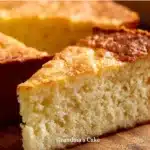
Grandma’s Cake Recipe
- Total Time: 55 minutes
- Yield: 8 servings 1x
- Diet: Vegetarian
Description
A classic easy cake recipe from scratch, featuring a soft crumb and customizable frosting for comfort and joy.
Ingredients
- 250 g (2 cups) all-purpose flour
- 200 g (1 cup) granulated sugar
- 10 g (2 tsp) baking powder
- 3 g (1/2 tsp) fine salt
- 113 g (1/2 cup) unsalted butter, softened
- 2 large eggs, room temperature
- 240 ml (1 cup) whole milk, room temperature
- 120 g (1/2 cup) sour cream
- 10 ml (2 tsp) pure vanilla extract
- Optional: Zest from 1 lemon or 1 tsp almond extract
Instructions
- Preheat the oven to 175°C (350°F) and prepare the pan.
- Sift together the flour, sugar, baking powder, and salt in a bowl.
- Cream the butter and sugar in a stand mixer until pale and fluffy.
- Add the eggs one at a time, then stir in the vanilla.
- Alternately add the dry ingredients with the milk and sour cream until just combined.
- Pour the batter into the prepared pan and smooth the top.
- Bake for 30–35 minutes until golden and a toothpick comes out clean.
- Cool in the pan, then transfer to a cooling rack. Frost once completely cool.
Notes
Always measure dry ingredients by weight for best results. Let ingredients come to room temperature before mixing.
- Prep Time: 20 minutes
- Cook Time: 35 minutes
- Category: Dessert
- Method: Baking
- Cuisine: American
Nutrition
- Serving Size: 1 slice
- Calories: 360
- Sugar: 28g
- Sodium: 220mg
- Fat: 16g
- Saturated Fat: 9g
- Unsaturated Fat: 5g
- Trans Fat: 0g
- Carbohydrates: 48g
- Fiber: 1g
- Protein: 5g
- Cholesterol: 85mg