
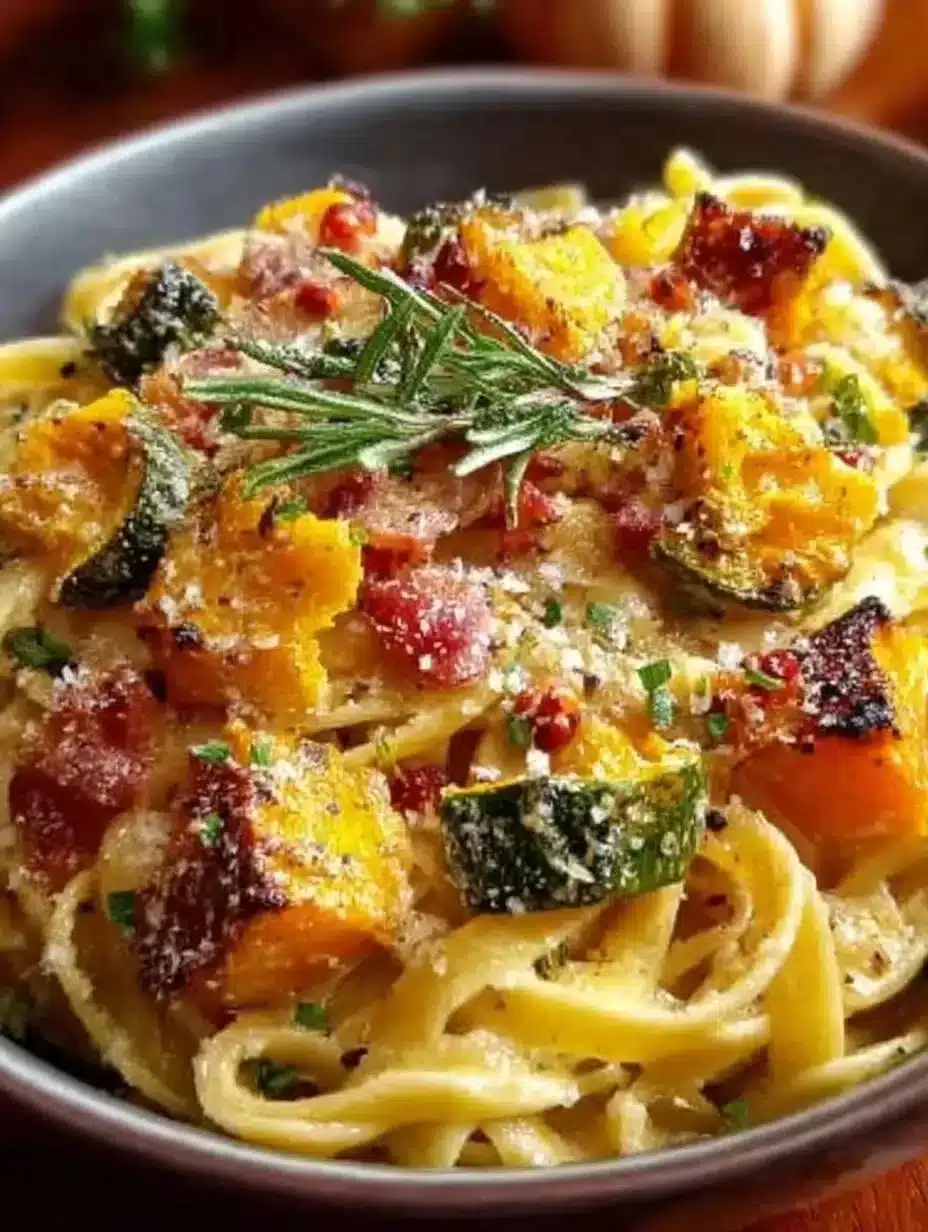
Autumn Sausage Pasta with Butternut & Sage
The first forkful tastes like fall: sweet roasted squash, warm sage, and rich, savory sausage wrapped around tender pasta. Autumn sausage pasta was developed after repeated tests to balance sweetness and spice; I refined the sauce through eight trials to keep the creaminess without making it heavy. This version is easy enough for a weeknight but has layered flavor that feels special. I learned the best timing while cooking in a restaurant kitchen where quick, consistent results mattered — that experience shows in the small but critical techniques below. Read on for precise measurements, timing cues, and tips to make this your go-to fall pasta.
Why This Recipe Works
- Roasting the butternut squash concentrates sweetness and creates caramelized edges that hold up in the sauce.
- Browning the sausage adds Maillard flavor (browned savory notes) that balances the squash’s sweetness.
- Deglazing the pan with a splash of white wine lifts browned bits, deepening the sauce’s savory base.
- A small amount of starchy pasta water binds the sauce to the noodles for an even coating without thinning.
- Finishing with high-quality Parmesan and fresh lemon brightens the dish and prevents cloying richness.
Try a similar technique with a baked sauce to see how finishing steps transform texture.
Ingredients Breakdown
- 450 g (1 lb) sweet Italian sausage, casings removed — Provides savory, fatty flavor. For milder heat use sweet sausage; for spice use hot.
- 600 g (1 medium) butternut squash, peeled and cut into 1.5 cm (1/2-inch) cubes — Roasts into sweet, caramelized pieces. If using pre-cut squash, watch roast time.
- 320 g (11 oz) pasta (rigatoni, penne, or orecchiette) — A tube or cup-shaped pasta traps sausage and squash.
- 1 medium onion, finely chopped (about 150 g / 1 cup) — Adds sweetness and aromatic base.
- 3 cloves garlic, minced (about 9 g) — Use fresh; garlic powder won’t bloom the same.
- 120 ml (1/2 cup) dry white wine — Deglazes pan and adds acidity; chicken stock can substitute if you prefer no alcohol.
- 240 ml (1 cup) low-sodium chicken stock — Adds savory body; use low-sodium to control final salt.
- 120 ml (1/2 cup) heavy cream — Creates silky sauce; half-and-half will be lighter but still fine.
- 60 g (1/2 cup) freshly grated Parmesan (plus extra to serve) — Salt and umami; pre-grated will not melt as smoothly.
- 2 tbsp (30 g) unsalted butter — Adds silk and sheen.
- 10–12 fresh sage leaves, torn — Sage pairs with squash; dry sage is not recommended here.
- 2 tbsp (30 ml) olive oil — For roasting and sautéing.
- 1 tsp (5 g) kosher salt (adjust if using Morton; halve the amount) — Use Diamond Crystal if you prefer the listed quantity.
- 1/2 tsp (2.5 g) freshly ground black pepper — Add more to taste.
- 1/4 tsp (0.5 g) crushed red pepper flakes — Optional for a subtle heat.
- Zest and juice of 1 lemon — Brightens and lifts the final dish.
Substitutions with warnings:
- Turkey sausage: lower fat, drier texture. Add 1–2 tbsp olive oil when browning.
- Dairy-free: swap cream for 200 ml (3/4 cup) full-fat canned coconut milk; flavor will be different.
- Gluten-free: use a 1:1 GF pasta (cook to package doneness) and check sausage label for fillers.
See a vegetarian butternut squash pasta variation to compare texture and flavor profiles.
Essential Equipment
- Baking sheet, rimmed (30 x 40 cm / 12 x 16 in) — For roasting squash in a single layer to promote browning.
- Large pot (4–6 liters) for boiling pasta — Enough water prevents sticking.
- Large, heavy skillet (30 cm / 12 in) with lid — Sauté sausage, deglaze, and finish sauce in one pan. Cast iron or stainless steel works best.
- Microplane or fine grater for Parmesan and lemon zest — Freshly grated cheese melts better.
- Tongs and slotted spoon — For moving sausage and pasta into the pan.
- Measuring spoons and cups and a kitchen scale — For accurate weights (preferred).
- Optional: silicone spatula for scraping browned bits. If you don’t have a skillet large enough, finish the sauce in a 9 x 13-inch baking dish and briefly bake at 175°C (350°F) for 8–10 minutes to meld flavors.
Step-by-Step Instructions
Prep Time 15 minutes, Cook Time 30 minutes, Inactive Time None, Total Time 45 minutes. Serves 4.
Step 1: Roast the Butternut Squash
Preheat the oven to 220°C (425°F). Toss 600 g (1 medium) butternut squash with 2 tbsp (30 ml) olive oil, 1/2 tsp (2.5 g) salt, and a few grinds of black pepper on a rimmed baking sheet. Roast in a single layer for 20–25 minutes, turning once, until edges are golden and pieces are tender when pierced with a fork (about 20 minutes).
Step 2: Cook the Pasta
While the squash roasts, bring a large pot of water to a rolling boil. Salt the water with 15 g (1 tbsp) kosher salt. Add 320 g (11 oz) pasta and cook until al dente — usually 1–2 minutes under package time, about 9–11 minutes depending on shape. Reserve 240 ml (1 cup) pasta water, then drain the pasta. The pasta should be tender but still have a slight bite.
Step 3: Brown the Sausage and Aromatics
Heat a large skillet over medium-high heat. Add 450 g (1 lb) sausage, breaking it up with a spoon; brown for 6–8 minutes until caramelized and no pink remains, stirring every 30 seconds. Transfer sausage to a bowl leaving 1–2 tbsp rendered fat in the pan; add 1 tbsp olive oil if needed, then sauté 1 medium onion for 4–5 minutes until translucent and fragrant. Stir in 3 minced garlic cloves and cook 30–45 seconds until aromatic.
Step 4: Deglaze and Build the Sauce
Pour in 120 ml (1/2 cup) dry white wine and scrape browned bits for 1–2 minutes until mostly reduced. Add 240 ml (1 cup) chicken stock and bring to a gentle simmer for 2 minutes. Stir in 120 ml (1/2 cup) heavy cream and reduce heat to medium-low; simmer for 3–4 minutes until the sauce thickens slightly and coats the back of a spoon.
Step 5: Combine Pasta, Sausage, and Squash
Return the sausage to the pan with roasted squash and 10 torn sage leaves; stir to combine. Add drained pasta and 60 g (1/2 cup) grated Parmesan, plus 60–120 ml (1/4–1/2 cup) reserved pasta water to reach a silky consistency. Cook together for 1–2 minutes so pasta absorbs sauce; do not overcook pasta — stop when sauce clings to noodles.
Step 6: Finish and Serve
Stir in 2 tbsp (30 g) unsalted butter, lemon zest and juice, and adjust seasoning with salt and 1/2 tsp (2.5 g) black pepper. Serve immediately with extra Parmesan and a few crisp sage leaves on top. The finished dish should be glossy, not soupy, and the pasta should be al dente.
Expert Tips & Pro Techniques
- Salt the pasta water well: it should taste like the sea. Properly salted pasta is the foundation of a flavorful dish.
- Don’t rush browning the sausage: let it develop deep color for complexity. Break it up but leave some larger crumbles for texture.
- Common mistake: adding too much reserved pasta water. Add it gradually — 60 ml (1/4 cup) at a time — to reach a sauce that coats the pasta.
- Make-ahead: roast the squash and brown the sausage up to 24 hours ahead. Refrigerate separately in airtight containers; finish the sauce and combine just before serving.
- Professional technique adapted for home: finish sauce with butter off the heat to create an emulsified, glossy finish. This is the same idea chefs use to enrich sauces quickly.
- If the sauce tastes flat, a quick splash (15 ml / 1 tbsp) of lemon juice or a pinch of flaky sea salt brightens all layers.
Storage & Reheating
- Refrigerator: Store cooled pasta in an airtight container for up to 3 days. Keep sauce and solids together to avoid drying.
- Freezer: This dish is not ideal for long-term freezing; textures change. Freeze only if needed in a freezer-safe container for up to 1 month. Thaw overnight in the fridge before reheating.
- Reheating: Reheat gently on the stove over low heat with a splash of water or stock (15–30 ml / 1–2 tbsp per serving) to loosen the sauce, stirring until warmed through. Avoid microwaving for long stretches, as it can toughen the sausage and dry the squash.
Variations & Substitutions
- Vegetarian Version: Replace sausage with 300 g (10 oz) cremini mushrooms, chopped, and add 120 g (4 oz) crumbled firm tofu or 150 g (5 oz) cooked lentils for protein. Roast mushrooms at 220°C (425°F) for 10–12 minutes. Keep cream and cheese the same.
- Gluten-Free Version: Use 320 g (11 oz) gluten-free pasta and cook to package doneness. No other time changes required; sauce thickness remains similar.
- Spicy Sausage Swap: Use hot Italian sausage instead of sweet. Keep the same weight and reduce crushed red pepper. The roast time and sauce timing are unchanged.
- Butternut Squash Swap: Use 600 g (1 lb) pumpkin or kabocha squash cut to same size. Roasting time stays 20–25 minutes, though kabocha may soften faster — test with a fork.
- Lighter Sauce: Substitute 120 ml (1/2 cup) Greek yogurt whisked with 2 tbsp (30 ml) pasta water for cream. Stir in off heat to avoid curdling.
Serving Suggestions & Pairings
- Serve with a simple green salad dressed in lemon vinaigrette to cut richness, and top with extra grated Parmesan. Also pairs well with a bright, herbed pasta salad for a bigger spread.
- For wine: a medium-bodied white like Pinot Gris or a light red like Beaujolais matches the sausage and squash.
- Garnish ideas: toasted pumpkin seeds for crunch, or a drizzle of good olive oil and a squeeze of lemon.
- Bread: warm crusty bread or focaccia to mop up any sauce is ideal.
Nutrition Information (per serving)
Serving size: about 1 plate. Recipe yields 4 servings.
- Calories: 680 kcal
- Total Fat: 34 g
- Saturated Fat: 14 g
- Cholesterol: 95 mg
- Sodium: 760 mg
- Total Carbohydrates: 58 g
- Dietary Fiber: 5 g
- Sugars: 8 g
- Protein: 27 g
Nutrition values are estimates. Actual values may vary based on specific ingredients and preparation methods.
Frequently Asked Questions
Q: Why did my pasta sauce separate or look greasy?
A: Likely too much heat after adding cream or too much fat was released from the sausage. Reduce heat, stir in reserved pasta water and butter off the heat to re-emulsify.
Q: Can I make this without eggs or dairy?
A: Yes. Replace cream with 200 ml (3/4 cup) full-fat coconut milk and omit Parmesan, or use a dairy-free grated alternative. Flavor will be different but still satisfying.
Q: Can I double this recipe for a larger group?
A: Yes. Double all ingredients and use two large skillets or finish in a large ovenproof dish, warming at 175°C (350°F) for 8–12 minutes to meld flavors if needed.
Q: Can I prepare components the night before?
A: Absolutely. Roast the squash and brown the sausage up to 24 hours ahead; store covered in the fridge. Reheat and finish with pasta and sauce just before serving.
Q: How long does this keep in the fridge?
A: Stored in an airtight container, the pasta keeps 3 days. Reheat gently on the stove with a splash of stock to restore creaminess.
Q: My squash fell apart while roasting — what went wrong?
A: Cubes were too small or overcooked. Cut to uniform 1.5 cm (1/2-inch) pieces and roast in a single layer at 220°C (425°F) for 20–25 minutes, turning once.
Q: Can I use pre-cooked or leftover roast vegetables?
A: Yes. Add them toward the end when combining to prevent further softening. You may need less pasta water because the vegetables won’t release juices.
Conclusion
This autumn sausage pasta is a reliable, cozy weeknight meal that feels a little special. If you want another take that mixes sausage with roasted vegetables and pasta, see Autumn Dinner with Sausage, Pasta, Brussels Sprouts and Butternut for a vegetable-forward version. For a recipe focused on the butternut-sage pairing without meat, check the rich and simple Butternut Squash, Sage & Sausage Pasta to compare techniques and flavor balance.
Print
Autumn Sausage Pasta with Butternut & Sage
- Total Time: 45 minutes
- Yield: 4 servings 1x
- Diet: Non-Vegetarian
Description
A delicious fall-inspired pasta dish featuring sweet roasted butternut squash, savory sausage, and fresh sage.
Ingredients
- 450 g (1 lb) sweet Italian sausage, casings removed
- 600 g (1 medium) butternut squash, peeled and cut into 1.5 cm (1/2-inch) cubes
- 320 g (11 oz) pasta (rigatoni, penne, or orecchiette)
- 1 medium onion, finely chopped (about 150 g / 1 cup)
- 3 cloves garlic, minced (about 9 g)
- 120 ml (1/2 cup) dry white wine
- 240 ml (1 cup) low-sodium chicken stock
- 120 ml (1/2 cup) heavy cream
- 60 g (1/2 cup) freshly grated Parmesan (plus extra to serve)
- 2 tbsp (30 g) unsalted butter
- 10–12 fresh sage leaves, torn
- 2 tbsp (30 ml) olive oil
- 1 tsp (5 g) kosher salt
- 1/2 tsp (2.5 g) freshly ground black pepper
- 1/4 tsp (0.5 g) crushed red pepper flakes (optional)
- Zest and juice of 1 lemon
Instructions
- Preheat the oven to 220°C (425°F). Toss butternut squash with olive oil, salt, and black pepper on a baking sheet. Roast for 20–25 minutes, turning once.
- Bring a large pot of water to a boil. Salt the water and add pasta, cooking until al dente, about 9–11 minutes. Reserve pasta water, then drain.
- Heat a large skillet over medium-high heat. Add sausage, browning for 6–8 minutes. Remove sausage, leaving some fat in the pan. Sauté onion in the skillet until translucent, then add garlic and cook until fragrant.
- Pour in white wine, scraping browned bits, and reduce for 1–2 minutes. Add chicken stock and simmer for 2 minutes. Stir in heavy cream and simmer until thickened.
- Return the sausage to the pan with roasted squash and sage. Add pasta and some reserved pasta water, mixing until a silky texture is achieved.
- Stir in butter, lemon zest, and juice. Adjust seasoning with salt and pepper, and serve immediately with extra Parmesan.
Notes
Make-ahead by roasting the squash and browning the sausage up to 24 hours prior. Serve with a green salad and warm bread.
- Prep Time: 15 minutes
- Cook Time: 30 minutes
- Category: Main Course
- Method: Baking
- Cuisine: Italian
Nutrition
- Serving Size: 1 serving
- Calories: 680
- Sugar: 8g
- Sodium: 760mg
- Fat: 34g
- Saturated Fat: 14g
- Unsaturated Fat: 16g
- Trans Fat: 0g
- Carbohydrates: 58g
- Fiber: 5g
- Protein: 27g
- Cholesterol: 95mg