
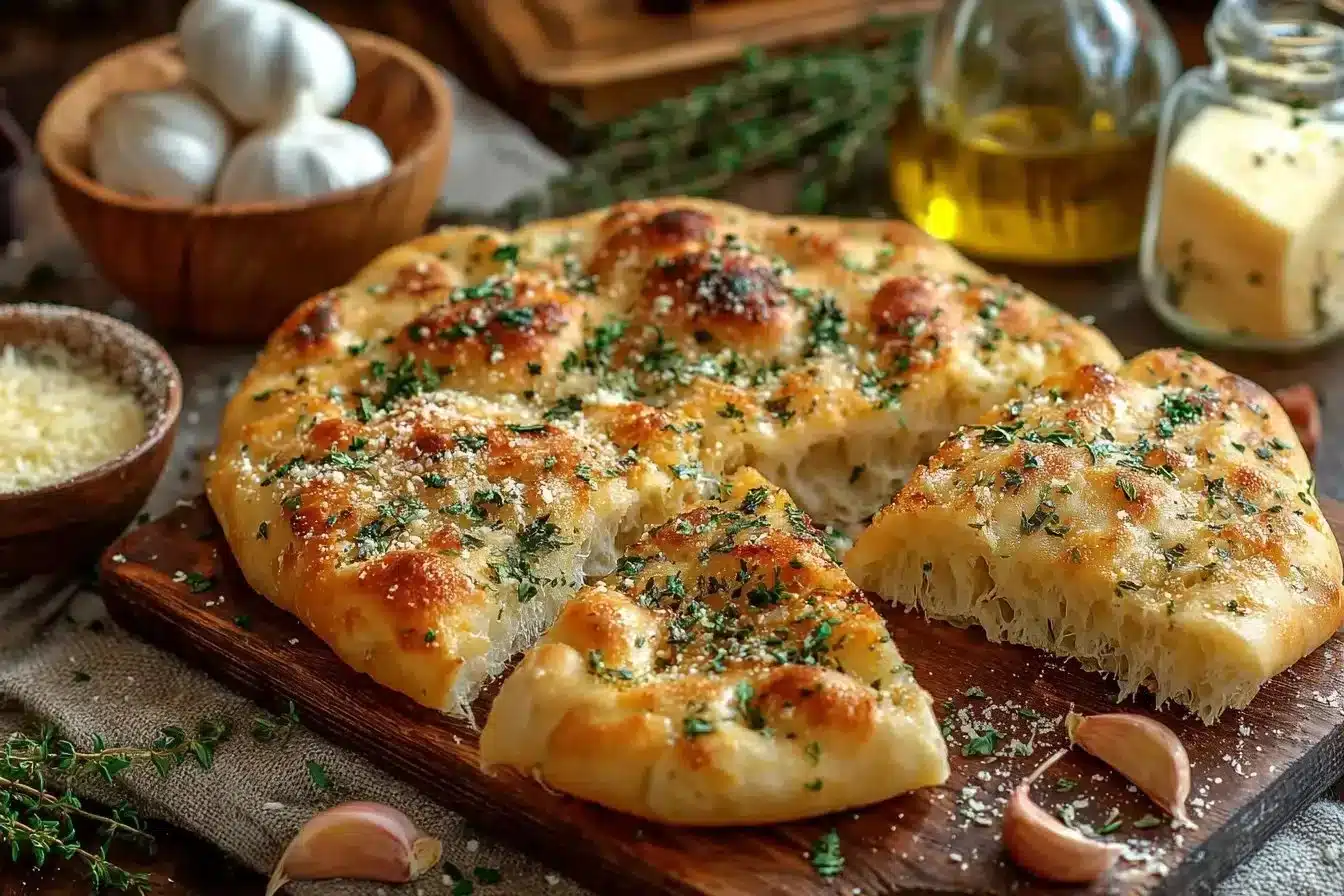
Crispy, Cheesy Garlic-Parmesan Focaccia
Garlic Parmesan Focaccia Bread sings with a golden crust, bubbling cheese, and fragrant ribbons of garlic oil in every bite. After testing this recipe 8 times with different flours and hydration levels, I settled on a version that yields a crisp bottom, airy crumb, and an herby top every time. I developed and refined the shaping and dimple technique while working in a busy Italian bakery, where speed and consistency mattered. This recipe is straightforward for home bakers, but I include pro tips so you can avoid common pitfalls and get bakery-level results at home. Read on for a clear ingredient breakdown, exact timings, and techniques to bake a loaf you’ll be proud to serve.
Why this recipe works
- High-hydration dough (65% water by weight) creates large, irregular air pockets and a soft interior.
- A short, warm first rise builds gluten quickly; a cool second rest deepens flavor through slow fermentation.
- Olive oil in the pan crisps the bottom and edges while keeping the center tender.
- Coarse dimpling traps garlic oil and cheese so each bite has concentrated flavor.
- Using a mix of freshly grated Parmesan and extra-virgin olive oil boosts umami and mouthfeel.
Ingredients breakdown
- All-purpose flour 500 g (4 cups): Provides structure but keeps the crumb tender. Substitute with 00 flour for a silkier crumb, but the dough may be slightly stickier.
- Water 325 ml (1 1/3 cups) at 24–26°C (75–80°F): Hydrates the dough; warm water helps yeast activate. Measure by weight when possible.
- Active dry yeast 7 g (2¼ tsp): Rapid rise and reliable flavor. Instant yeast can be used at the same weight and mixed straight into flour.
- Salt 10 g (1 3/4 tsp) Diamond Crystal / 1 tsp Morton’s: Seasoning controls fermentation and strengthens gluten. If using Morton’s, use slightly less because it’s denser.
- Granulated sugar 10 g (2 tsp): A little sugar feeds yeast and encourages browning.
- Extra-virgin olive oil 60 ml (1/4 cup) + 45 ml (3 tbsp) for pan and finishing: Oil both enriches the dough and crisps the crust in the pan.
- Garlic 4–5 cloves, minced (~15 g): Fresh garlic gives bright, sharp flavor. Roasted garlic is milder and sweeter—use if preferred.
- Freshly grated Parmesan 60 g (2 oz / 1 cup packed): Adds saltiness and umami. Pre-grated powders won’t melt as smoothly.
- Fresh rosemary 2 tbsp, finely chopped: Aromatic herb that pairs with garlic and cheese. Oregano also works.
- Flaky sea salt for finishing: Adds crunch and bursts of saltiness.
Essential equipment
- Digital kitchen scale (highly recommended) — for accuracy and consistent results.
- 9×13-inch (23×33 cm) rimmed baking pan or a 12×9-inch (30×23 cm) sheet pan — choose a shallow pan so the dough spreads correctly.
- Stand mixer with dough hook (optional) — hand-knead by stretch-and-fold if you don’t have one.
- Instant-read thermometer — to spot oven and dough temperatures.
- Fine grater for fresh Parmesan — pre-grated cheese affects melt and texture.
- Mixing bowls, rubber spatula, and bench scraper.
- If you don’t have fresh rosemary, use 1 tsp dried.
Step-by-step instructions
Prep Time: 20 minutes • Cook Time: 20–25 minutes • Inactive Time: 1 hour 30 minutes (rises) • Total Time: 1 hour 55 minutes • Servings: 8 (1 slice)
Step 1: Bloom the yeast and mix the dough
Combine 325 ml (1 1/3 cups) warm water at 24–26°C (75–80°F) with 7 g (2¼ tsp) active dry yeast and 10 g (2 tsp) sugar in a large bowl. Let sit for 5–7 minutes until foamy, then stir in 60 ml (1/4 cup) olive oil. Add 500 g (4 cups) all-purpose flour and 10 g (1 3/4 tsp) salt; mix with a wooden spoon until a shaggy dough forms (about 1–2 minutes).
Step 2: Knead or stretch-and-fold
If using a stand mixer, knead on medium speed with the dough hook for 5–6 minutes until the dough is smooth and slightly tacky. If mixing by hand, perform four sets of stretch-and-fold every 10 minutes (about 20 seconds per set) until the dough is smooth. Do not overmix — stop as soon as the dough becomes elastic.
Step 3: First rise (bulk fermentation)
Transfer the dough to a lightly oiled bowl, cover with plastic, and let rise in a warm spot for 45–60 minutes, or until roughly doubled and airy to the touch. A dough thermometer should read about 24–26°C (75–80°F). The rise is complete when the dough retains an indentation when gently pressed.
Step 4: Shape in the pan and second rest
Oil a 9×13-inch (23×33 cm) pan with 45 ml (3 tbsp) olive oil. Gently transfer the dough to the pan and press it outward to the corners. Cover and rest for 20–30 minutes at room temperature to relax the gluten and spread further.
Step 5: Dimple, top, and final proof
Use your fingertips coated with olive oil to press deep dimples across the surface, about 1–2 cm apart. Mix 2–3 tbsp olive oil with minced garlic (4–5 cloves) and chopped rosemary; drizzle evenly over the dough. Sprinkle 60 g (2 oz / 1 cup) freshly grated Parmesan and flaky sea salt. Let proof uncovered for 15–20 minutes just before baking.
Step 6: Bake until golden
Preheat oven to 220°C (425°F). Bake for 20–25 minutes until the top is golden brown, the edges are crisp, and the internal temperature reaches about 95°C (203°F). Cool in the pan for 5 minutes, then transfer to a rack. Serve warm.
Expert Tips & Pro Techniques
- Common mistake: Overworking the dough will tighten the gluten and give a dense crumb. Stop kneading when it’s smooth and elastic.
- Use a metal pan and plenty of oil — it makes a crisp, golden bottom. A dark pan browns faster; reduce oven temp by 10–15°C (25°F) if using one.
- Make-ahead: You can complete through Step 4, cover tightly, and refrigerate the pan overnight (8–12 hours). Bring to room temperature for 30–45 minutes before finishing Step 5 and baking.
- Professional trick adapted for home: Do one 10-minute steam burst at the oven start by spritzing water on the oven walls or placing a small pan of hot water on the rack below — this enhances oven spring and crust shine.
- For an extra-open crumb, increase hydration to 70% (350 ml water) and do an extra 30-minute warm rise; be prepared for a stickier dough.
- Avoid too much topping weight; too much cheese or heavy herbs will compress the dough and hinder lift.
Storage & Reheating
- Refrigerator: Store cooled focaccia wrapped tightly in plastic wrap in an airtight container for up to 3 days.
- Freezer: Focaccia freezes well. Cool completely, then wrap in parchment and foil and freeze up to 3 months. Thaw overnight in the fridge.
- Reheating: Reheat at 175°C (350°F) for 8–12 minutes until warmed through and crust revives. Avoid microwaving — it makes the crust soggy.
Variations & Substitutions
- Herb & Olive Version: Replace Parmesan with 1/2 cup pitted, halved olives and double the rosemary. Baking time is the same.
- Gluten-Free: Use 500 g (4 cups) 1:1 gluten-free flour blend and add 1 tsp xanthan gum if the blend lacks it. Dough will be wetter; bake 22–28 minutes and cool before slicing.
- Cheesy Pull-Apart: After baking, slice into squares and brush with garlic butter for a pull-apart appetizer. Keep same bake time.
- Dairy-Free: Omit Parmesan and sprinkle with nutritional yeast (2 tbsp) or omit cheese entirely; flavor will be less umami-rich.
- Whole Wheat: Replace 150 g (1 1/4 cups) of the all-purpose flour with whole wheat. Increase water by 25–30 ml (2 tbsp) and expect a slightly nuttier, denser crumb.
Serving suggestions & pairings
- Serve warm with a bowl of tomato soup or marinara for dunking.
- Pair with a simple salad of arugula, lemon, and shaved Parmesan for a light meal.
- For a heartier plate, serve alongside roasted chicken or an Italian beef — try our creamy parmesan Italian beef for complementary flavors.
- For a weekend brunch, top squares with soft scrambled eggs and smoked salmon, or serve with a garlic-butter baked chicken like this garlic-butter baked chicken.
Nutrition information (per serving)
Serving size: 1 slice • Servings: 8
- Calories: 280 kcal
- Total Fat: 12 g
- Saturated Fat: 3.5 g
- Cholesterol: 10 mg
- Sodium: 480 mg
- Total Carbohydrates: 36 g
- Dietary Fiber: 2 g
- Sugars: 2 g
- Protein: 8 g
Nutrition values are estimates. Actual values may vary based on specific ingredients and preparation methods.
Frequently asked questions
Q: Why did my focaccia turn out dry?
A: Dry focaccia usually means too little water or over-baking. Check that you measured water by weight and that the dough reached the indicated hydration. Also confirm oven temperature with an oven thermometer and reduce baking time if the crust browns too quickly.
Q: Can I make this without garlic?
A: Yes. Omit fresh garlic and use 1 tsp garlic powder or roast the garlic and spread the softened cloves on the dough for milder flavor.
Q: Can I double this recipe?
A: Yes. Use two pans rather than one very large pan to keep the same thickness. Double all ingredients and divide the dough evenly between pans; rising and baking times remain similar.
Q: Can I prepare this the night before?
A: Yes. After shaping in the oiled pan, cover and refrigerate overnight (8–12 hours). The slow chill adds flavor. Bring to room temperature 30–45 minutes before the final proof and bake as directed.
Q: How long does this keep in the fridge?
A: Stored wrapped in an airtight container, it keeps well for up to 3 days. For best texture, reheat in the oven rather than microwaving.
Q: What kind of Parmesan should I use?
A: Use freshly grated Parmigiano-Reggiano for the best melt and flavor. Pre-grated, aged powder has anti-caking agents and won’t melt smoothly.
Q: My dough won’t spread in the pan — what should I do?
A: Let it rest uncovered for 10–15 minutes to relax the gluten, then gently coax it outward with oiled fingertips. A brief second stretch-and-fold can help redistribute tension.
Internal recipe inspiration and related reads
- If you enjoy bold garlic-parmesan flavors, try a complementary weeknight bake like this garlic-parmesan chicken bake.
- For a cheesy bread contrast, see our guide to Brazilian cheese bread.
- Want to practice garlic butter techniques used here? This creamy garlic crab-stuffed recipe shows similar butter infusion methods.
Conclusion
If you want extra inspiration or a slightly different take on this flavor profile, see Heather’s detailed take on Garlic Parmesan Focaccia Bread for additional photos and tips. For another simple Parmesan-and-garlic version with different topping ideas, check this savory Parmesan Garlic Focaccia Bread write-up.
Print
Crispy, Cheesy Garlic-Parmesan Focaccia
- Total Time: 115 minutes
- Yield: 8 servings 1x
- Diet: Vegetarian
Description
This Garlic Parmesan Focaccia Bread features a golden crust, bubbling cheese, and aromatic garlic oil, offering a crisp bottom and airy crumb.
Ingredients
- 500 g (4 cups) all-purpose flour
- 325 ml (1 1/3 cups) warm water (75–80°F)
- 7 g (2¼ tsp) active dry yeast
- 10 g (1 3/4 tsp) salt
- 10 g (2 tsp) granulated sugar
- 60 ml (1/4 cup) extra-virgin olive oil + 45 ml (3 tbsp) for pan and finishing
- 4–5 cloves garlic, minced (~15 g)
- 60 g (2 oz / 1 cup packed) freshly grated Parmesan
- 2 tbsp fresh rosemary, finely chopped
- Flaky sea salt for finishing
Instructions
- Bloom the yeast by mixing warm water, yeast, and sugar in a large bowl; wait until foamy, about 5-7 minutes. Stir in olive oil.
- Add flour and salt, mixing until a shaggy dough forms.
- Knead the dough using a stand mixer or stretch-and-fold method by hand until smooth.
- Transfer the dough to an oiled bowl, cover, and let rise in a warm spot until doubled, about 45-60 minutes.
- Oil the pan and gently transfer the dough, pressing it to the corners; cover and rest for 20-30 minutes.
- Dimple the surface, drizzle with garlic oil, sprinkle cheese and sea salt, and let proof for 15-20 minutes.
- Preheat the oven to 220°C (425°F) and bake for 20-25 minutes until golden brown. Cool slightly before serving.
Notes
For best results, avoid overworking the dough and use a metal pan for a crisp bottom. Make-ahead options include refrigerating after shaping.
- Prep Time: 20 minutes
- Cook Time: 25 minutes
- Category: Bread
- Method: Baking
- Cuisine: Italian
Nutrition
- Serving Size: 1 slice
- Calories: 280
- Sugar: 2g
- Sodium: 480mg
- Fat: 12g
- Saturated Fat: 3.5g
- Unsaturated Fat: 7g
- Trans Fat: 0g
- Carbohydrates: 36g
- Fiber: 2g
- Protein: 8g
- Cholesterol: 10mg